Creating an Account Is the Easy Part. Movers and Leavers Are Where You Get in Trouble.
Your offboarding checklist collects the laptop. Does it collect the access? Why joiner-mover-leaver belongs on the platform.
Read Now

Your offboarding checklist collects the laptop. Does it collect the access?
When Dana left her job last spring, everything on the checklist got done. Her laptop came back on her last day. Her badge stopped working that evening. HR closed out her paperwork. All of it ran through the same service portal, triggered by one record in the HR system.
One of her accounts stayed active for four months.
It wasn’t the first gap. When Dana joined five years earlier, her laptop was waiting on her desk, but she spent her first morning opening help desk tickets for access. When she moved to a new team, her new access arrived within a day. Her old access never went away.
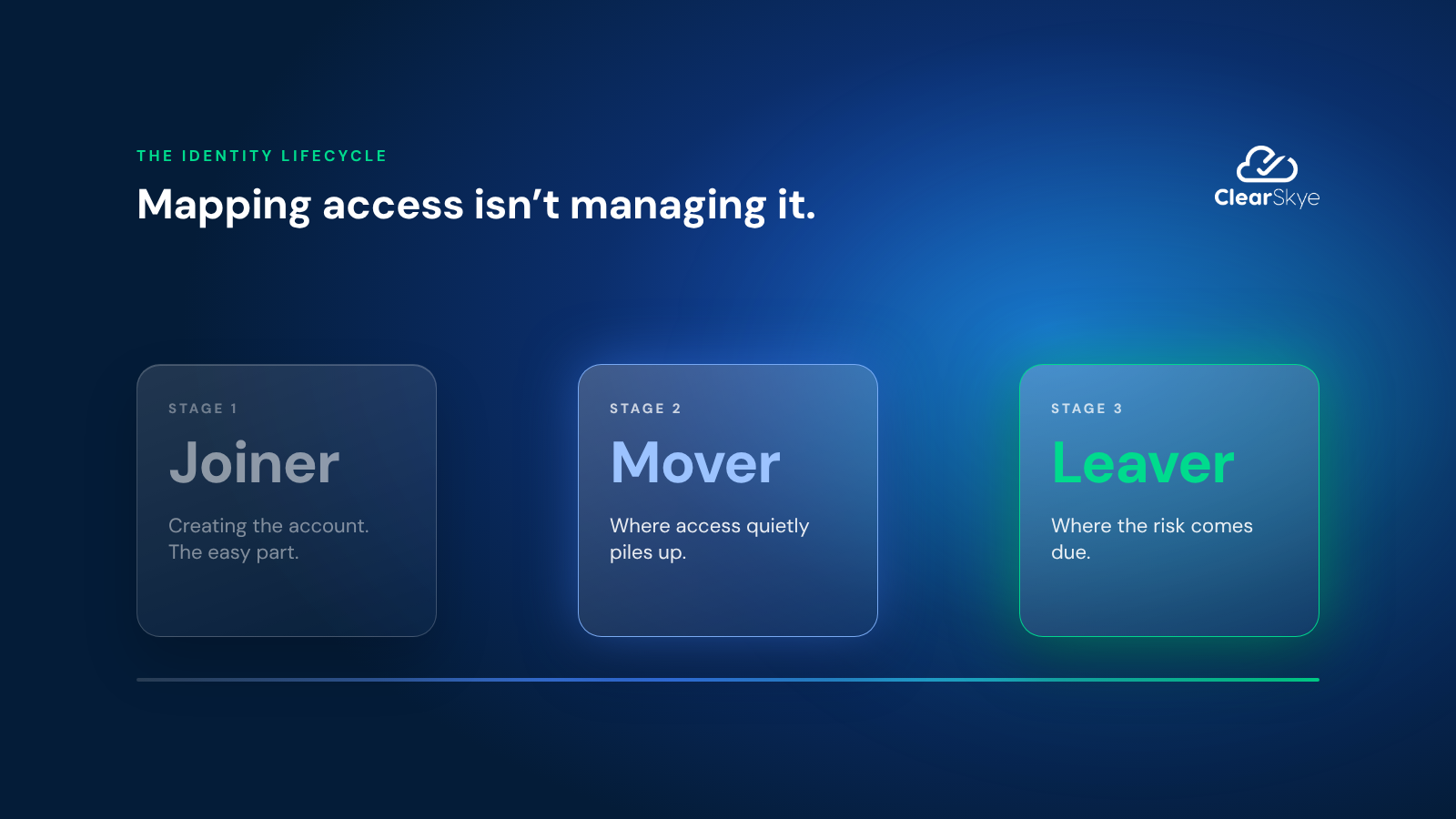
That’s the identity lifecycle at most organizations: joiner, mover, leaver. The laptop has a process. The access often doesn’t.
Much of this year’s identity investment went into access intelligence: mapping what every human, machine and AI identity can reach. That visibility matters. But mapping access isn’t managing it.
Plenty of tools can create an account. Far fewer govern what happens next: changing access when someone changes roles, and removing it, completely and on time, when they leave.
ServiceNow’s identity investments, including Veza, focus on access intelligence. They don’t do policy-based joiner-mover-leaver on the platform. That’s the gap Clear Skye fills.
Every stage carries risk, but not equally.
Most identity programs work hardest on joiners. The exposure builds through movers and shows up at leavers.
Your offboarding checklist collects the laptop. Does it collect the access?
When Dana left her job last spring, everything on the checklist got done. Her laptop came back on her last day. Her badge stopped working that evening. HR closed out her paperwork. All of it ran through the same service portal, triggered by one record in the HR system.
One of her accounts stayed active for four months.
It wasn’t the first gap. When Dana joined five years earlier, her laptop was waiting on her desk, but she spent her first morning opening help desk tickets for access. When she moved to a new team, her new access arrived within a day. Her old access never went away.
That’s the identity lifecycle at most organizations: joiner, mover, leaver. The laptop has a process. The access often doesn’t.
Much of this year’s identity investment went into access intelligence: mapping what every human, machine and AI identity can reach. That visibility matters. But mapping access isn’t managing it.
Plenty of tools can create an account. Far fewer govern what happens next: changing access when someone changes roles, and removing it, completely and on time, when they leave.
ServiceNow’s identity investments, including Veza, focus on access intelligence. They don’t do policy-based joiner-mover-leaver on the platform. That’s the gap Clear Skye fills.
Every stage carries risk, but not equally.
Most identity programs work hardest on joiners. The exposure builds through movers and shows up at leavers.
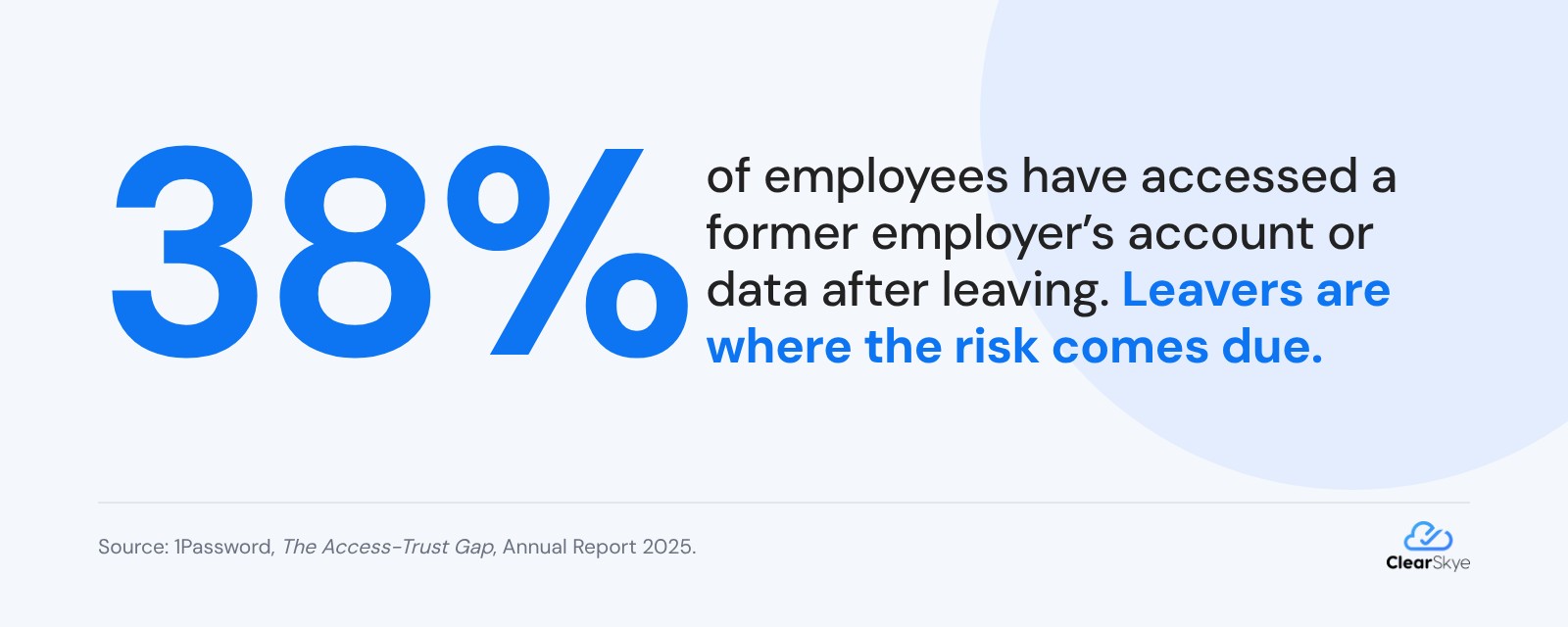
A new hire needs a laptop, a desk, HR onboarding and access. In many organizations, all but the access already run on ServiceNow.
When lifecycle runs on the same platform, access becomes one more step in that workflow instead of a separate system waiting on a sync. And when someone leaves, their access comes off in the same workflow that collects the laptop, with one audit trail showing what happened and when.
No two organizations run joiner-mover-leaver the same way. Contractors, people with two roles, an SAP landscape with its own rules. With multi-tenant identity tools, your process bends to fit theirs.
On the platform, it works the other way around. Your team extends lifecycle with the same workflow tools it already uses on ServiceNow, so the lifecycle bends to fit your business.
Wärtsilä automated joiner-mover-leaver for 20,000 users across more than 70 countries, with near-zero resistance, by putting identity tasks inside the ServiceNow experience people already used. At 84.51°, provisioning time dropped from 20 minutes to 2. And a European manufacturer replacing its legacy identity system recently chose Clear Skye for the same reasons: it wanted lifecycle governance inside ServiceNow, and the flexibility to extend it to its own requirements, including SAP.
“With Clear Skye, I can look at a profile that contains all the directories, access, and account information in one place. It allows me to troubleshoot and provision more easily, and get people up and running quicker.” — Chris Miller, Lead Security Analyst, 84.51°
Access intelligence tells you what’s true about access today. Lifecycle management decides what happens next. Both matter. Only one of them shuts the door when someone walks out of it.
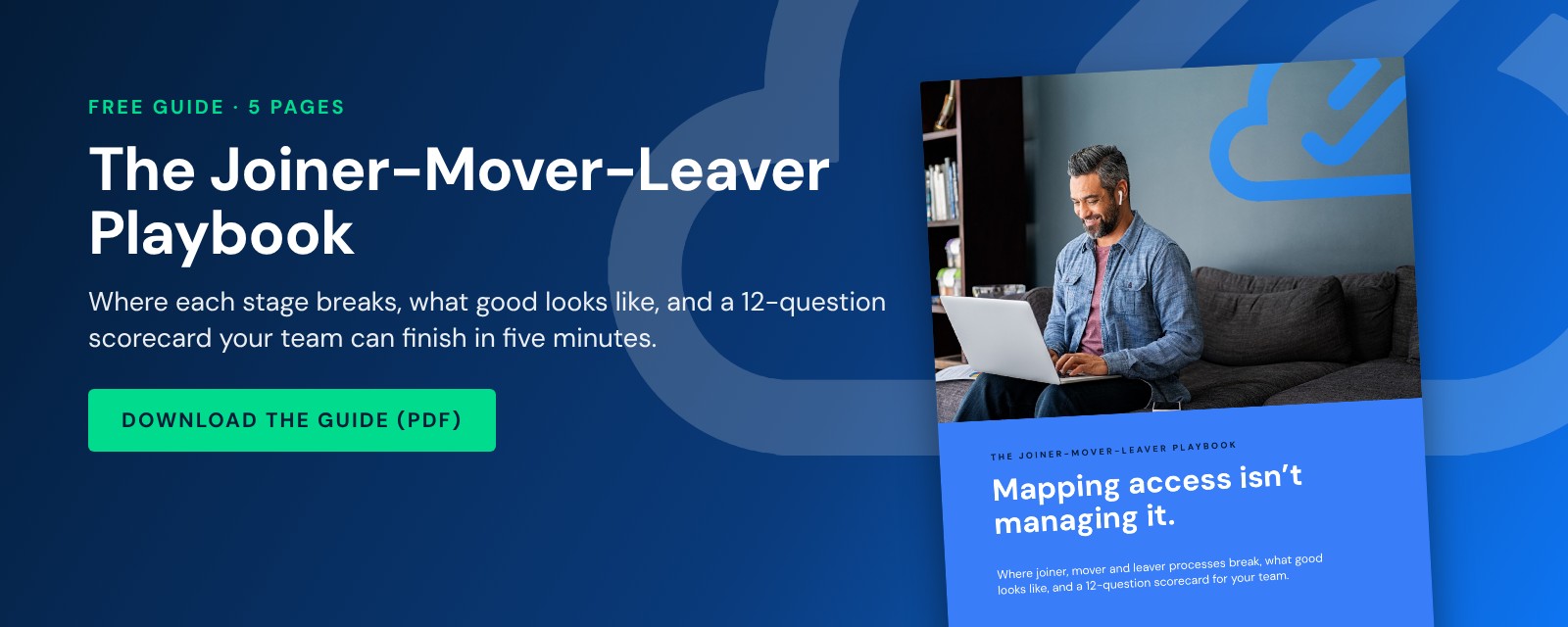
Want to see where your lifecycle stands? Our free guide, The Joiner-Mover-Leaver Playbook, shows where each stage breaks and includes a 12-question scorecard you can finish in five minutes. Download the guide
Or see lifecycle on the platform for yourself: take the self-guided demo.
Every stage carries risk, but not equally.
Most identity programs work hardest on joiners. The exposure builds through movers and shows up at leavers.
A new hire needs a laptop, a desk, HR onboarding and access. In many organizations, all but the access already run on ServiceNow.
When lifecycle runs on the same platform, access becomes one more step in that workflow instead of a separate system waiting on a sync. And when someone leaves, their access comes off in the same workflow that collects the laptop, with one audit trail showing what happened and when.
No two organizations run joiner-mover-leaver the same way. Contractors, people with two roles, an SAP landscape with its own rules. With multi-tenant identity tools, your process bends to fit theirs.Every stage carries risk, but not equally.
Most identity programs work hardest on joiners. The exposure builds through movers and shows up at leavers.
On the platform, it works the other way around. Your team extends lifecycle with the same workflow tools it already uses on ServiceNow, so the lifecycle bends to fit your business.
Wärtsilä automated joiner-mover-leaver for 20,000 users across more than 70 countries, with near-zero resistance, by putting identity tasks inside the ServiceNow experience people already used. At 84.51°, provisioning time dropped from 20 minutes to 2. And a European manufacturer replacing its legacy identity system recently chose Clear Skye for the same reasons: it wanted lifecycle governance inside ServiceNow, and the flexibility to extend it to its own requirements, including SAP.
“With Clear Skye, I can look at a profile that contains all the directories, access, and account information in one place. It allows me to troubleshoot and provision more easily, and get people up and running quicker.” — Chris Miller, Lead Security Analyst, 84.51°
Access intelligence tells you what’s true about access today. Lifecycle management decides what happens next. Both matter. Only one of them shuts the door when someone walks out of it.
Want to see where your lifecycle stands? Our free guide, The Joiner-Mover-Leaver Playbook, shows where each stage breaks and includes a 12-question scorecard you can finish in five minutes. Download the guide
Or see lifecycle on the platform for yourself: take the self-guided demo.